Should you invest your ad budget in Google Ads or Instagram? Discover which platform delivers the highest ROI, conversion rates, and revenue for your specific industry.
Every business investing in digital marketing eventually reaches the exact same fork in the road: "Should we put our budget into Google Ads, or are we better off scaling with Instagram (Meta) ads?"
Too often, companies make this decision based on anecdotal advice: "A friend in retail made great sales on Instagram, so let's pour our money there," or "Why bother with social media when Google has high-intent searchers?" This trial-and-error mindset is the fastest way to burn capital on the wrong channel.
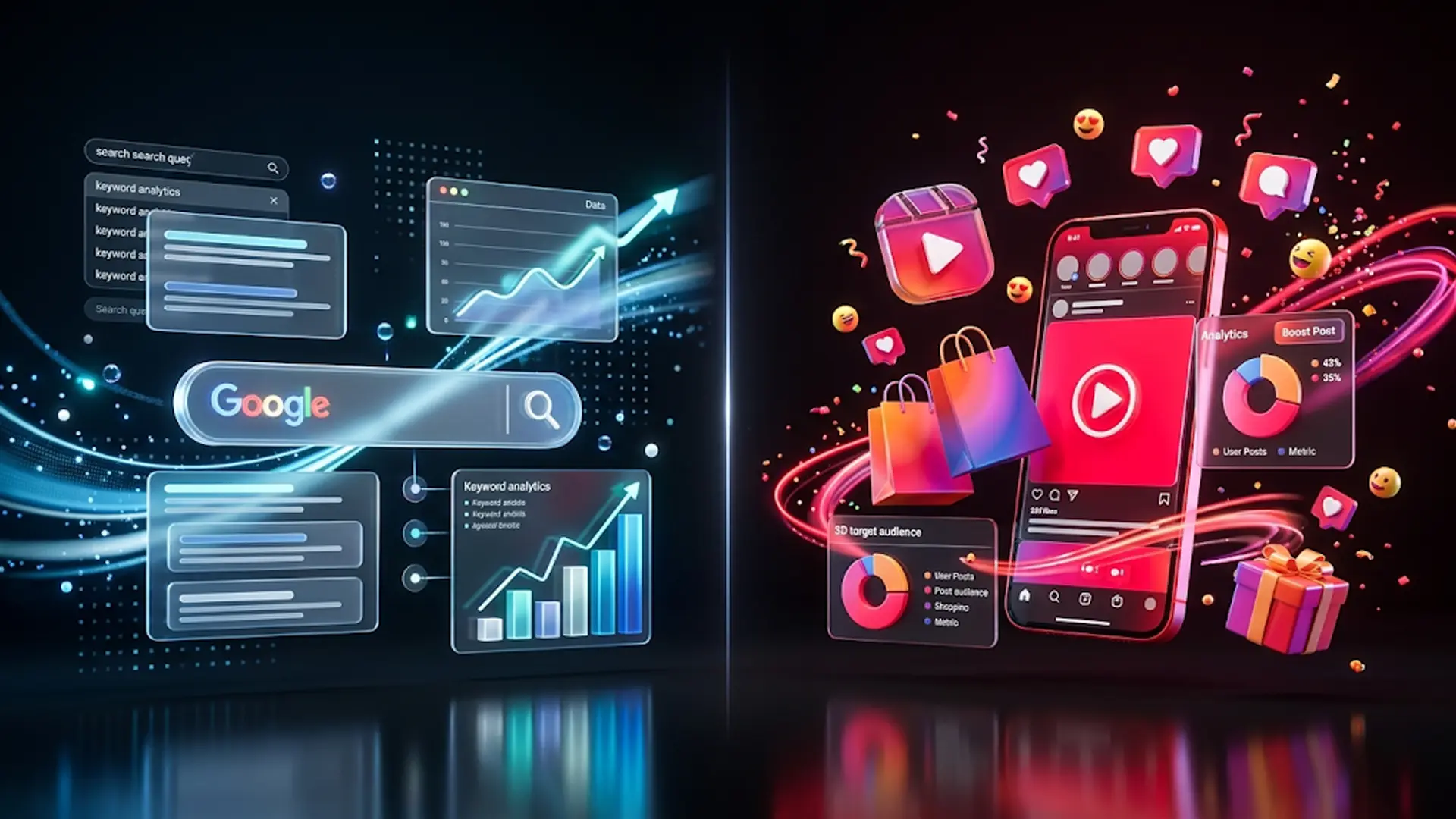
The reality is simple: Google and Instagram are not direct competitors. They serve two entirely different buyer mindsets. One captures existing, active demand, while the other manufactures new desire from scratch.
So, which platform is the right fit for your business model? Let’s break down the mechanics.
1. Core Operating Mechanics: "The Searcher" vs. "The Discoverer"
The fundamental distinction between both platforms comes down to user intent:
-
Google Ads (Search Network – High Intent): When a user turns to Google, they already have a defined problem to solve or an exact product in mind. Someone typing "emergency commercial plumber" or "custom bespoke suit" is already deep into the buying cycle. Google Ads allows you to intercept that pre-existing demand at the moment of intent.
-
Instagram / Meta Ads (Visual Discovery & Impulse): Nobody opens Instagram with the direct intention of buying furniture or booking a B2B service. People use social media to unwind, connect, and be entertained. With compelling creative and short-form video (Reels), your ad disrupts their feed, sparking an impulse or highlighting a problem they didn’t realize they had.
2. Which Platform Wins in Your Industry?
Selecting the right ad channel depends heavily on the nature of what you sell and how long your prospective customer deliberates before buying:
| Industry / Business Model | Optimal Primary Channel | Strategic Rationale |
| Urgent & High-Intent Services (Locksmiths, Legal, Repair, Niche B2B) | Google Ads | Customers in an emergency don’t browse Reels; they Google immediate solutions. |
| Aesthetic & Visual Products (Fashion, Beauty, Jewelry, Home Decor) | Instagram (Meta) | Purchasing desire is fueled by aesthetics, social proof, and video demonstration. |
| Experience & Lifestyle (Hospitality, Restaurants, Medical Aesthetics) | Instagram (Meta) | Ambient footage, client reviews, and behind-the-scenes content drive direct action. |
| High-Ticket & Extended Sales Cycles (Real Estate, Automotive, Enterprise B2B) | Hybrid Funnel | You need Instagram for brand prestige and social proof, paired with Google search capture. |
3. Click Economics and Cost Efficiency
From a financial and unit-economic perspective, the pricing dynamics differ substantially:
-
Instagram Ads: Typically deliver significantly lower Cost Per Click (CPC) and Cost Per Mille (CPM / Cost per 1,000 Impressions). It remains an exceptionally cost-effective engine for testing creative, generating mass brand awareness, and building broad audience pools with moderate budgets.
-
Google Ads: Search clicks are often more expensive, particularly in competitive commercial verticals. However, the conversion rate on these clicks is consistently higher because the visitor actively sought out your solution.
In short: Instagram fills the top and middle of your sales funnel at scale, while Google harvests qualified buyers at the bottom.
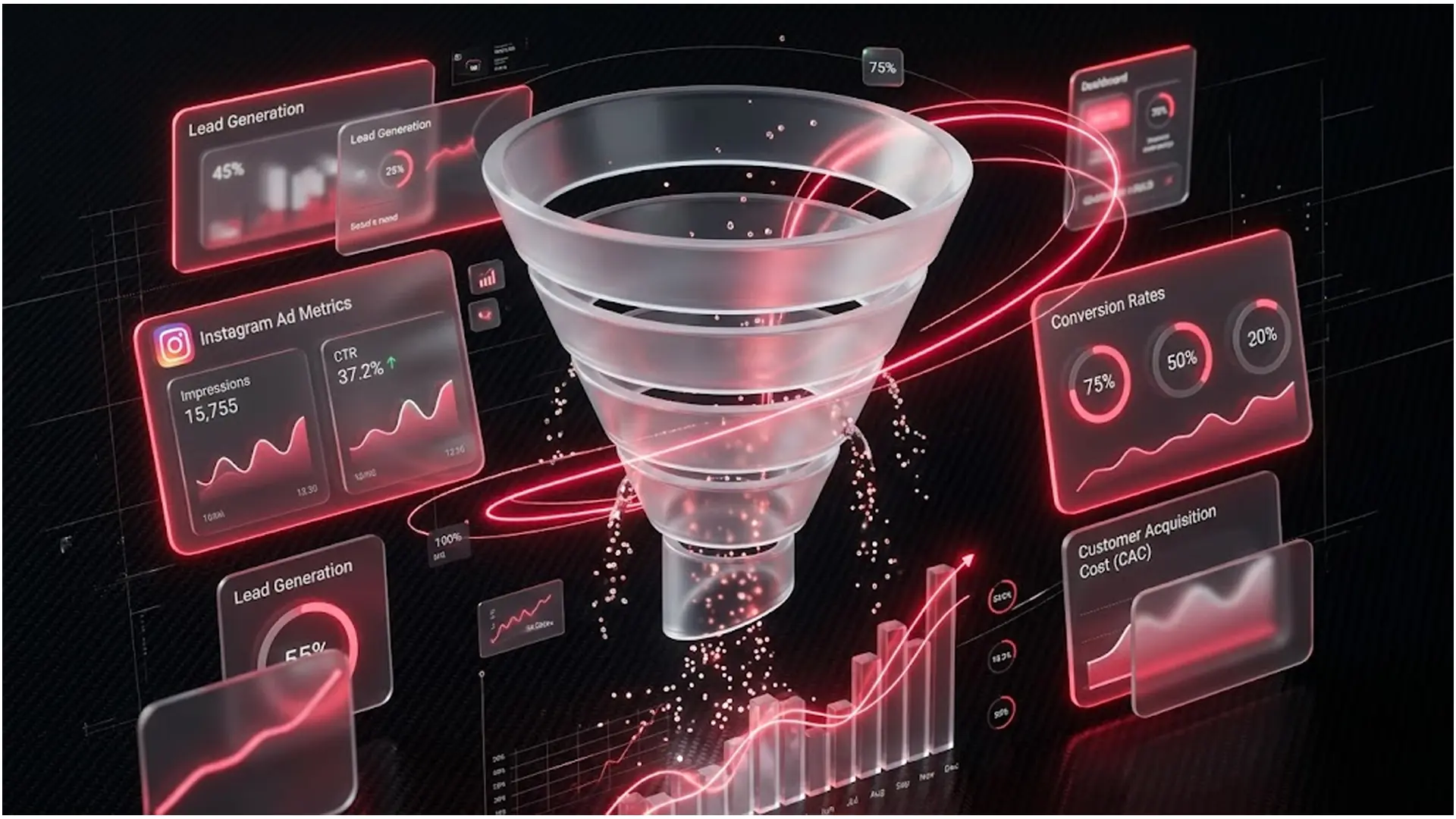
4. The True Growth Engine: The "Hybrid Funnel" Model
Leading modern brands rarely limit themselves to a binary choice between Google and Instagram. Instead, they engineer a unified funnel where both platforms amplify each other:
-
Top of Funnel – Discovery (Instagram): You deploy creative short-form videos and curated assets via cohesive Social Media Management to introduce your brand to qualified cold audiences.
-
Bottom of Funnel – Search Capture (Google): Prospects who discover your brand on Instagram often search your company name or category on Google days later. When they do, your search ads and landing pages capture that high-intent traffic instantly.
-
Mid-to-Bottom – Retargeting (Meta Ads): Visitors who hit your website via Google search without buying are re-engaged across Instagram feeds using targeted Meta Ads retargeting sequences, presenting limited-time offers or customer reviews to finalize the sale.
By integrating both channels, you eliminate single-platform dependency and minimize your blended customer acquisition cost (CAC).
Stop Guessing With Your Marketing Capital
Digital advertising is not a lottery; it is a mathematical growth engine. Allocating your marketing budget to the wrong channel burns capital without validating your actual market offer.
At Gefsun, we evaluate your unit economics, customer journey, and competitive landscape to deploy your capital where it yields the highest return on ad spend (ROAS)—whether that means dominating search results or scaling social ad campaigns.
? Ready to determine the most profitable advertising mix for your business? Contact Gefsun today to design a data-driven growth plan.
Let’s Apply These Strategies to Your Business.
Schedule a free discovery call with our experts to implement the digital transformation and marketing strategies you’ve just explored.
Talk to an Expert